Mobile app privacy: decisions to make before release
Privacy affects product behaviour, not just the wording of a policy. What the app requests, what it sends and how it responds to a user's choices all need deliberate design. This article provides general planning information, not legal advice. Have qualified counsel review the actual processing, legal bases and documents for your product.
Updated: · tealtap
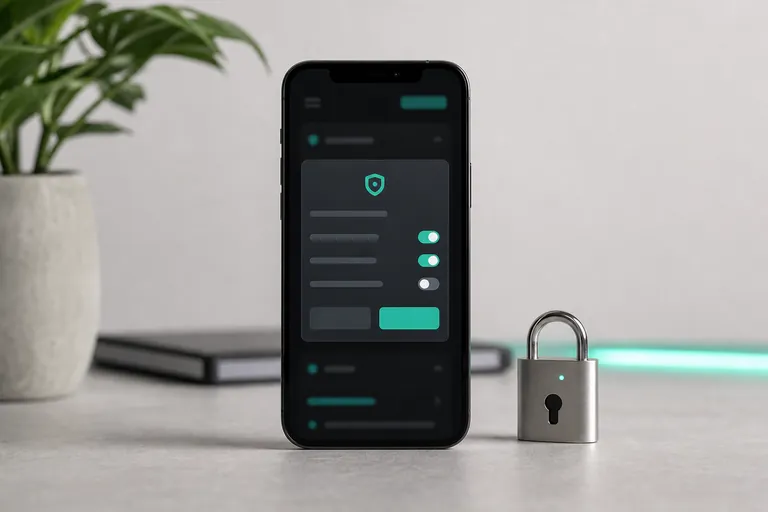
Map data before designing a consent prompt
Follow the core journey and record the data used at each step. Include storage on the phone, backend processing and third party services. For each item, identify its purpose, location, access arrangements, proposed retention and deletion process. Include diagnostic logs and SDK traffic as well as visible form fields. A feature being hidden does not establish that its data collection has stopped.
The GDPR's purpose limitation and data minimisation principles provide a reason to challenge unnecessary collection. Ask which defined product purpose each field supports. Inspect SDK configuration and observe test traffic instead of relying only on marketing descriptions. This inventory supports technical work and legal review; it is not itself a declaration of compliance.
Separate purposes, legal bases and responsibilities
The appropriate legal basis needs assessment for each purpose. Do not assume a general acceptance checkbox resolves every processing activity. Prepare a decision record that connects the purpose, required data, parties involved and legal review outcome. Developers need concrete behaviour to implement, while legal specialists need an accurate account of what the system actually does.
Assign owners for approving notices, evaluating suppliers and handling requests. Have controller and processor roles and relevant transfer arrangements reviewed. Record which data each provider receives and under which configuration. Revisit this record when introducing a new SDK or changing a service. A familiar provider name is not a substitute for examining the actual arrangement.
Make the privacy notice match the product
Article 13 of the GDPR sets out information associated with collecting personal data from the individual. Develop the relevant notice with counsel using the inventory. In the product, make the approved version accessible at appropriate points and available for later reference. Use terminology that matches the interface so words such as account, history and deletion describe recognisable actions.
Keep approved versions and a change history. Plan how a user request reaches the right person and how affected records can be located. Counsel should determine applicable legal procedures; the technical team must make approved actions workable. A published policy cannot compensate for not knowing where information is stored or which service receives it.
Design permission refusal as a normal path
Platform permissions and the legal assessment of processing are separate concerns. Google Play's User Data policy addresses appropriate runtime permission requests. For every requested capability, identify the related feature and the fallback when permission is refused. Explain the immediate purpose in context rather than asking for every possible capability when the app first opens.
Test refusal, later revocation and partial access where applicable. Check what remains usable and whether feedback explains the next step. A system permission dialog does not describe every downstream use of data. Align the feature explanation, approved privacy information and actual behaviour, then verify the result using test accounts and observable requests.
Give consent choices a technical effect
In this planning approach, optional product analytics starts only after prior consent. That is an implementation choice, not a legal classification of every possible measurement technique. Have the applicable basis and related requirements assessed for the actual setup. Where consent is used, account for withdrawal under the GDPR rather than treating acceptance as a permanent configuration.
Keep the relevant SDK inactive before a decision and after refusal. On withdrawal, stop subsequent collection covered by that choice and apply the approved handling plan. Examine automatic initialisation, queued events and user identifiers. Test undecided, accepted, refused and withdrawn states with network inspection. A switch that changes appearance while requests continue is not a working consent control.
Reconcile store disclosures with observed data flows
Apple's App Privacy guidance includes the practices of third party partners integrated into the app. Google Play provides a Data safety form and official completion guidance. Build the disclosures from the combined inventory of your own code and SDKs, using the current instructions for each store. Assign owners for technical evidence, approval and entering the answers.
Compare the store answers, privacy notice and tested network behaviour whenever relevant functionality changes. Store review does not certify general legal compliance. Keep a concise record of the tested release and unresolved questions without copying personal data into the record. This lets the next release team understand the decision rather than reconstructing it from memory.
Plan deletion and operational access
Describe the account lifecycle across related records, external systems and backups. A delete button needs a defined backend procedure. Have any continued retention and its conditions reviewed before promising universal immediate erasure. Use test data for the implementation exercise and confirm what operators can observe when the procedure succeeds or fails.
Include log access, retention configuration and the internal request route in operating documentation. Hand over the data inventory, approved notice source and verification steps with the product. Privacy then remains a manageable release responsibility instead of a document with no owner. We develop native iOS apps in Swift and Android apps in Kotlin, as well as Flutter, React Native and PWA applications. We also build backends and APIs, IoT/BLE apps and AI features. We document technical responsibilities and data flows during planning.
Frequently asked questions
Can a website privacy notice cover the app?
It may provide a starting point if it accurately covers the app's processing too. Review mobile data flows, SDKs and access points with counsel.
Is a camera permission GDPR consent?
Do not automatically treat it as such. Platform permission and the legal basis for a particular use need separate consideration.
How do we verify analytics refusal?
Inspect test traffic before a choice, after refusal and after withdrawal. Check SDK startup and queued events as well as the visible control.
Does this guide establish compliance?
No. It is general planning information, not legal advice or a compliance assessment. The actual product needs legal and technical review.
Related reading and services
Privacy decisions need implementation in interface design, backend behaviour and release preparation.
Discuss your project
Describe the product purpose, categories of data and proposed services. Mention any approved processing plan and legal contact. Use redacted examples and test data in the initial enquiry rather than sending personal records or production credentials.